Sexualized Abuse of Power
The work explores the re- and deconstruction of a Gothic altarpiece. The choice of the triptych from St. Johannis Church in Dannenberg as the basis for this manipulation was determined by entering the search terms “triptych” and “altar” into a search engine. Instead of depicting the Passion narrative traditionally presented in the triptych from the mid-15th century, *IN NOMINE PATRIS* presents a different kind of passion across three screens: the decades-long sexual abuse of children and adolescents within the Roman Catholic Church. Representing the victims, we witness a procession of damaged children's toys in the approximately three-minute animated film. These toys gradually populate the virtual church space and eventually gather in silence beneath the cross.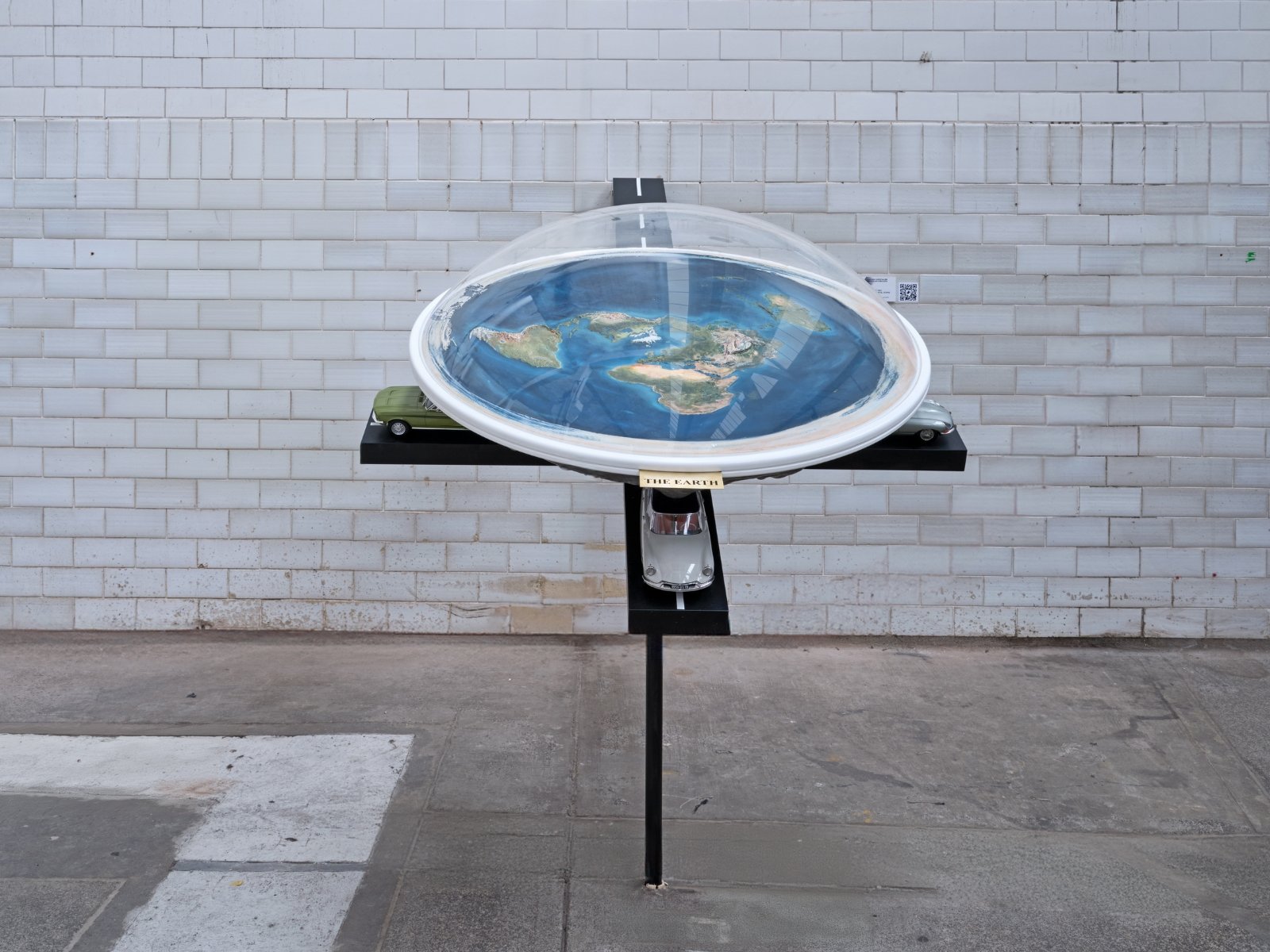
Conspiracy Theories
Creationism, the literal belief in creation stories, is often associated with the denial of the theory of evolution, according to which life on Earth arose through a long process of development. Religious fundamentalists are mostly male, ignore scientific facts such as man-made climate change as a result of the burning of fossil fuels, and are enthusiastic about conspiracy theories. The installation of a flat earth, carried by three model cars on a wooden cross, plays with the connections between irrationality, petro-masculinity, fundamentalism, and authoritarian desire. Visually, the work draws on motifs from the Discworld novels by British fantasy author Terry Pratchett.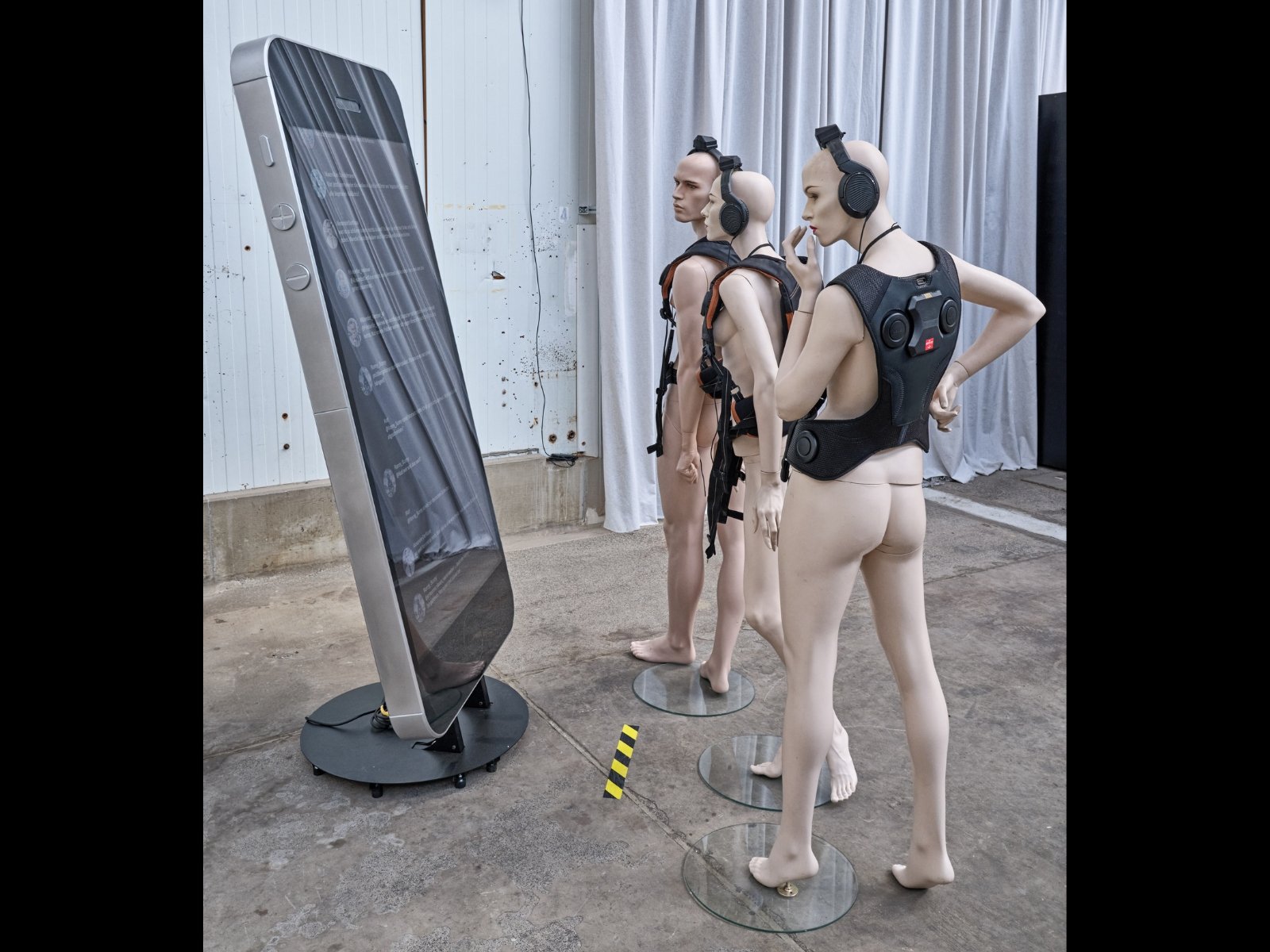
Hate Speech on Social Media
On a giant smartphone, several people are chatting while lighthearted schlager music plays through the headphones. However, as one steps closer, the harmless background music shifts to threatening death metal, and the seemingly superficial conversation reveals itself to be filled with hate and incitement. What initially appears harmless, upon closer inspection and listening, exposes itself as the death of a pluralistic society. To highlight this everyday phenomenon in social media usage, both the posts and the music have been exaggerated, specially staged, and composed for this work.
War and War Crimes Table 1
The 1:3 scale model is a modified version of the enormous table at which Russian President Vladimir Putin received state guests in early 2022. Instead of the mighty pedestals on which the original oak table is enthroned, the tabletop of the model rests on three legs resembling the upper stages of Russian Soyuz rockets. Instead of fine inlays, the tabletop of the adaptation is framed with gold leaf. Hidden in the floral motifs on the tabletop are tanks and howitzers aimed at the supposed counterpart. The ensemble is complemented by two chairs standing at the head of the table and slightly pulled away. Equipped with headphones, visitors immerse themselves in the silence of the immersive installation—a symbol of silence and speechlessness in the face of the “turning point,” the cruel reality of war in the middle of Europe in the 21st century.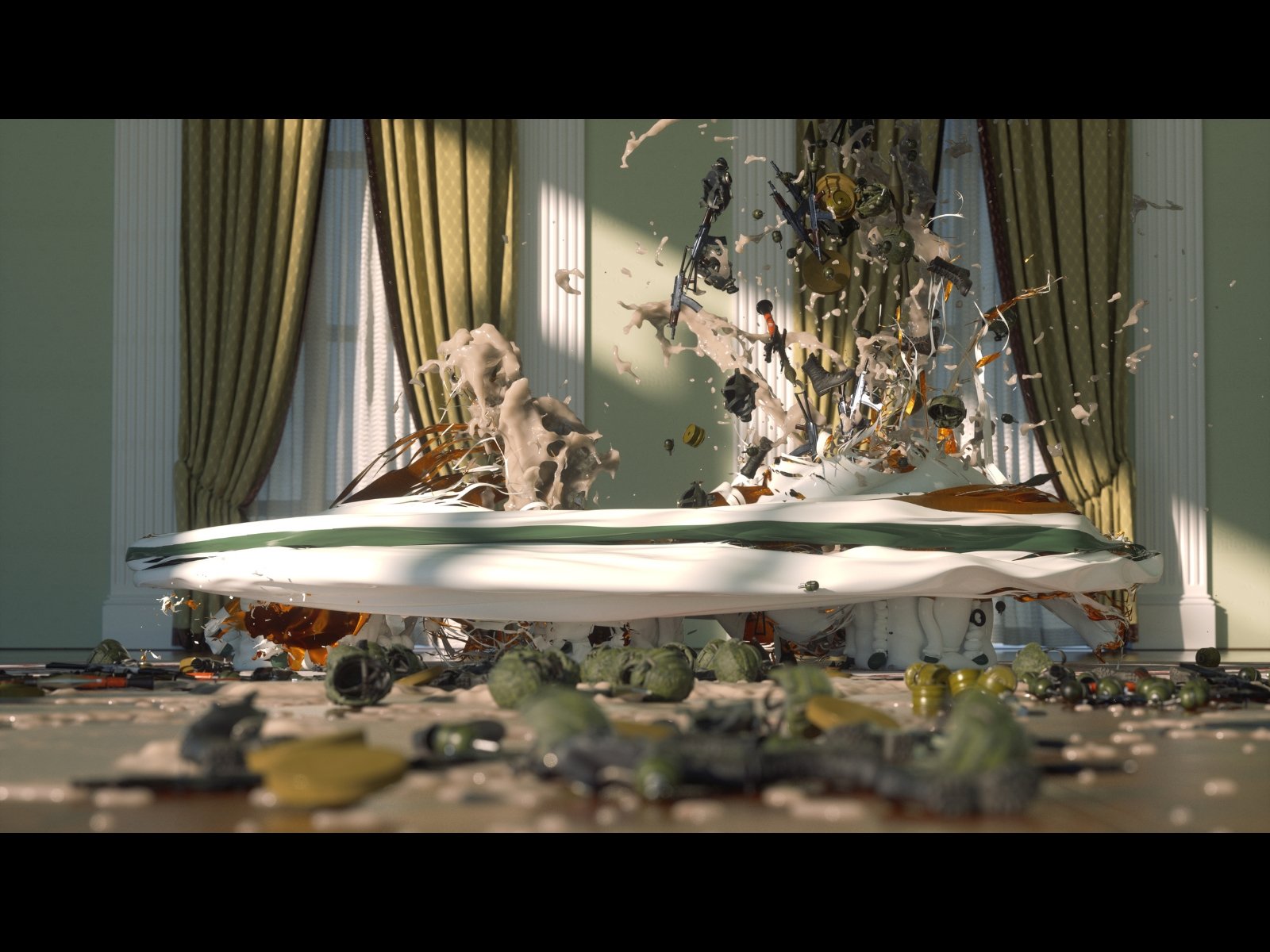
War and War Crimes Table 2
The video animation reveals the true essence of the table: Putin's obscene fantasies and lust for power. After inflating itself to bursting point, the table explodes and a never-ending stream of sticky liquid pours out onto the screen, along with cascades of matryoshka dolls, which in turn turn out to be weapons and ammunition and further evidence of the bloody war of aggression. The orgy of violence transitions into slow-motion passages that vary central scenes from the film Zabriskie Point by Italian director Michelangelo Antonioni as a kind of “Ukrainian requiem.” In keeping with the content, the animated film can only be viewed when one enters a booth covered in red velvet and a viewing hatch opens, as in a peep show.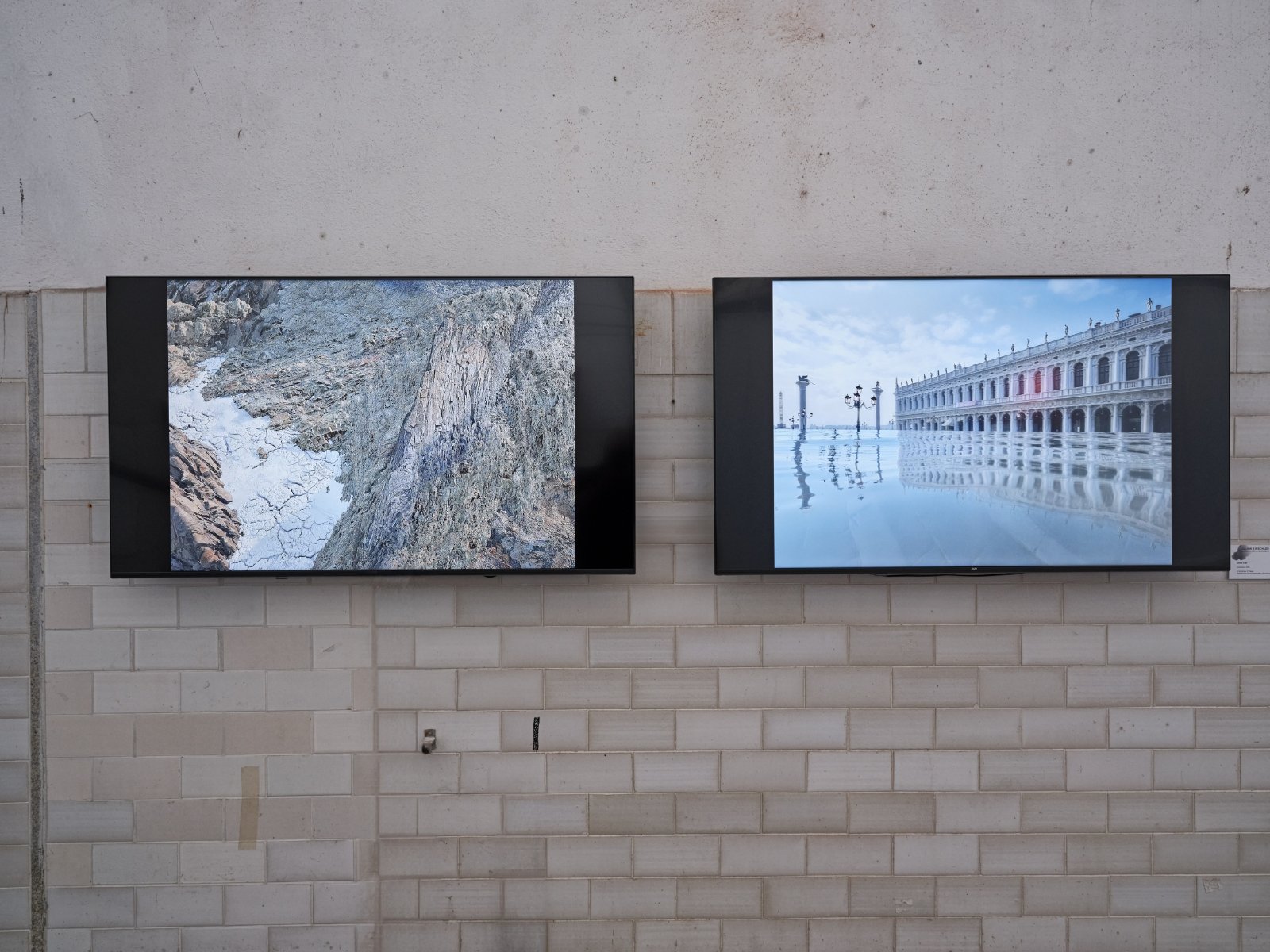
Environmental Damage
While the ice is melting in the mountains, water levels are rising elsewhere. Symbols of the sublime, such as giant glaciers, and places of human longing, such as St. Mark's Square in Venice, are threatened with destruction. The 3D animation of two images from the photo series Mountains, Meadows, and Forests and High Noon condenses this into a memento mori: climate change will not wait.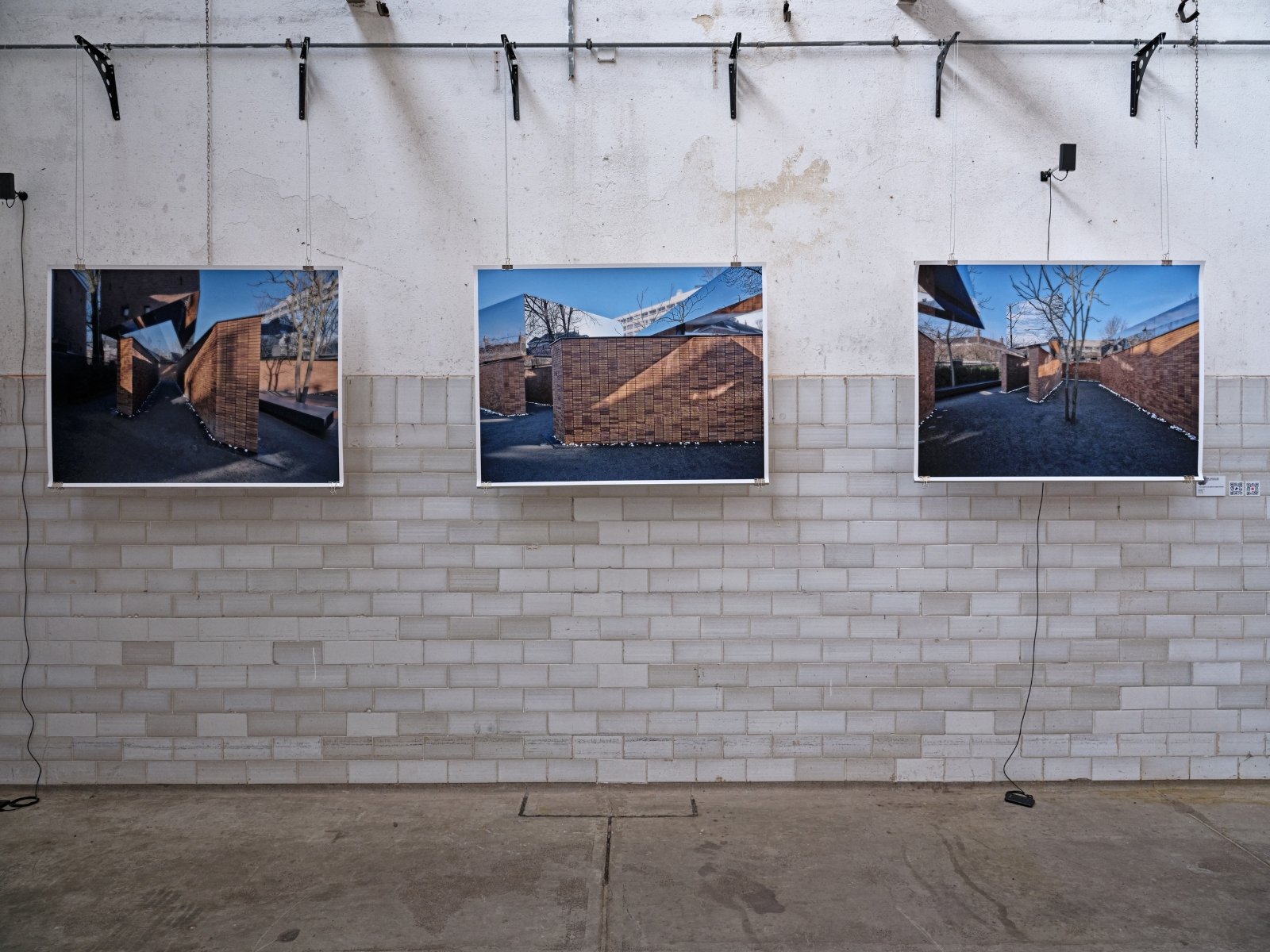
Anti-Semitism 1
The three photographs come from the *High Noon* series, for which the artist captured deserted locations in various European cities during the lockdown and later manipulated them with a "visual virus." Presented as a triptych, the images depict the Nationaal Holocaust Namenmonument in Amsterdam, where the names of Dutch Holocaust victims are engraved. As with all images in the series, the title was generated using the *What3Words* system, which replaces traditional GPS coordinates with three-word addresses via an algorithm. As viewers approach the images, they hear a woman's voice reciting the victims' names in Dutch.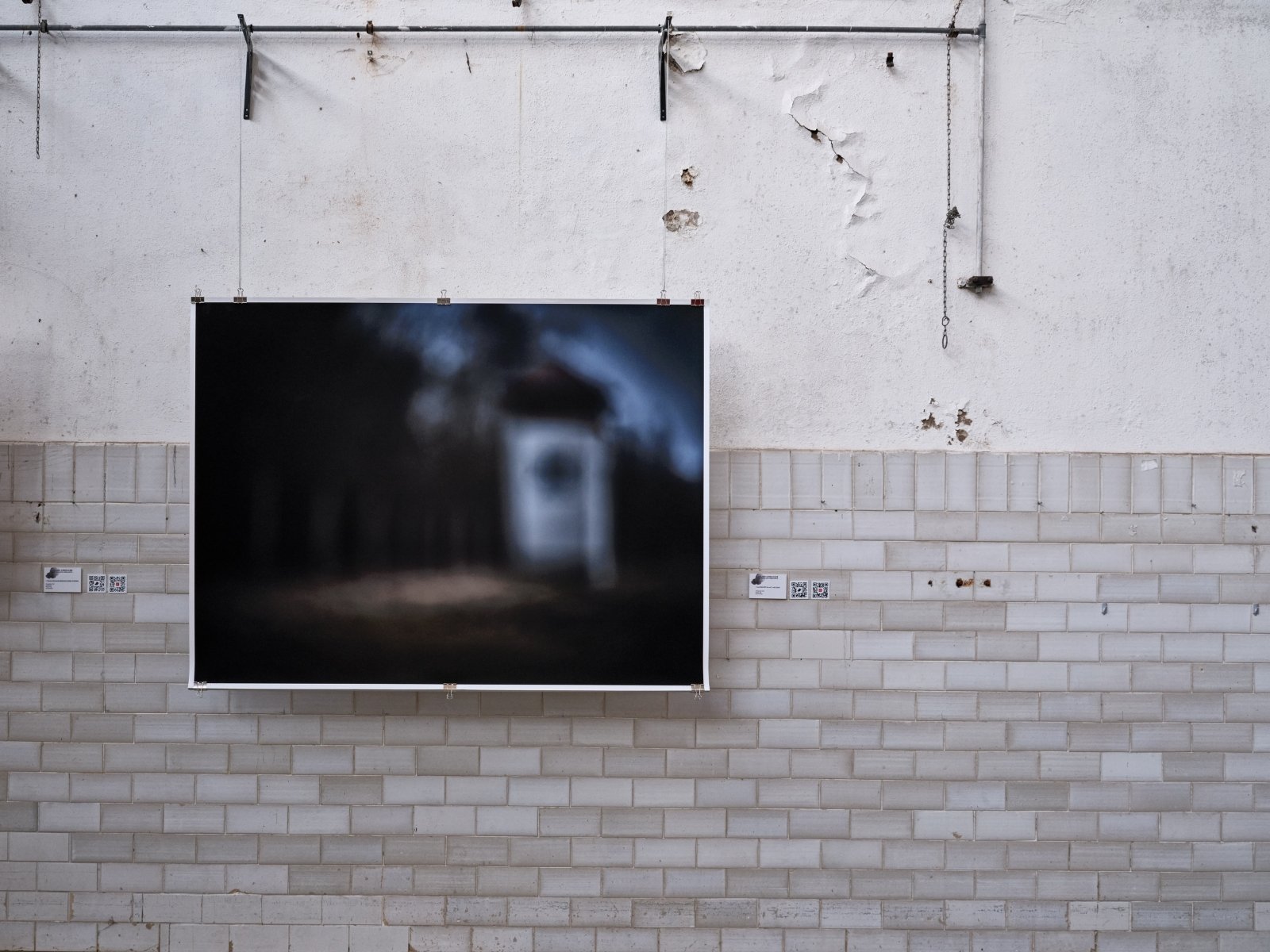
Anti-Semitism 2
The work features a blurred photograph of a landscape with a tower on the grounds of the Dachau Concentration Camp Memorial. It was taken during a joint visit to the memorial with musician Stefan Kling. The discomfort conveyed by the piece does not stem from concrete imagery but rather from its interplay with Kling’s composition, which is based on motifs from a 1935 orchestra of the Jewish Cultural Association. The circulating movement of the music reinforces the warning embedded in the title, which was generated using *What3Words*.
Rising Right-Wing Extremism
In recent years, there has been a shift to the right almost everywhere in Europe. The rise of the AfD in Germany and the electoral successes of right-wing populist and radical right-wing parties in Europe were the trigger for the individual images, which were first generated with the help of artificial intelligence and then assembled into a whole. It has been known since before the French Revolution that leaders can sooner or later become victims of their own reign of terror. Attached to the photograph is a newspaper on a wooden clipboard, in which the image content is explained.